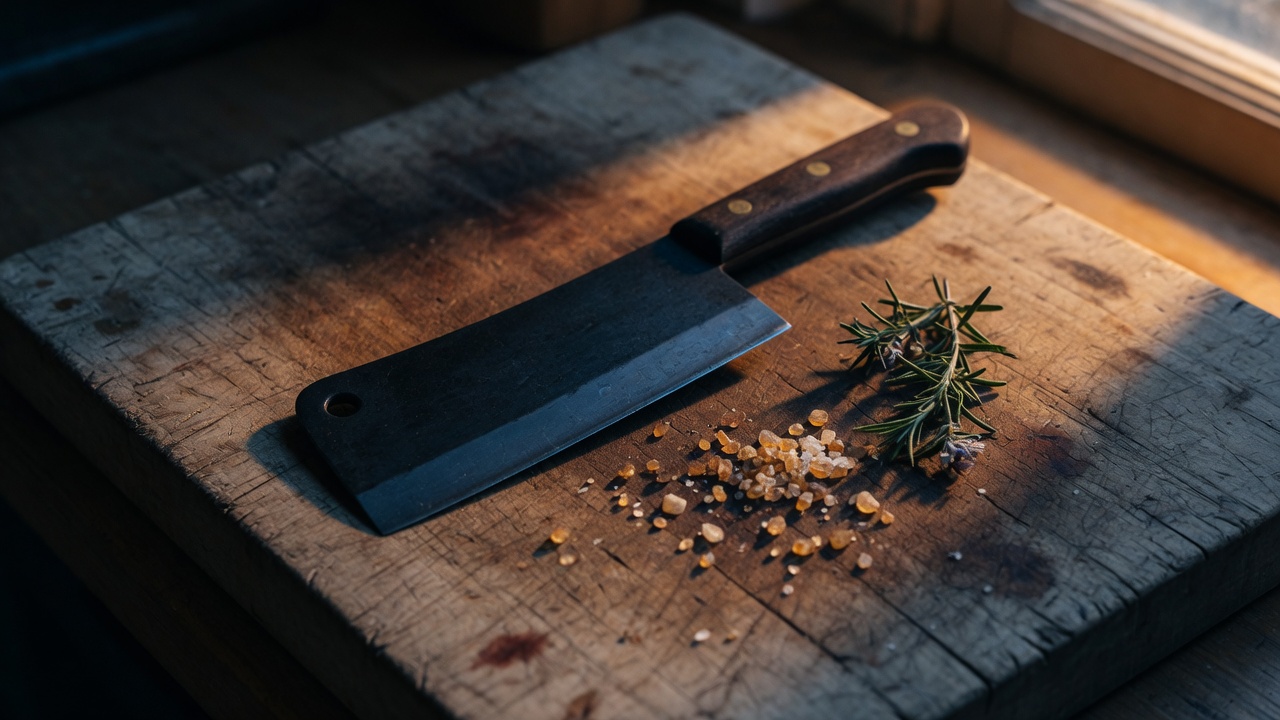
How a counter works
Three moves. No app, no cart, no checkout counter.
The reason a butcher counter exists in 2026 is the same reason it existed in 1826 — somebody hands you what they made, you hand them money, and the conversation in between is the whole job. Here’s what the conversation looks like.
№ 01 Ask
“What are you making?”
We start with the dinner, not the cut. What are you making — Tuesday-night weeknight, Saturday dinner party, week of braising, first time cooking steak for someone you want to impress? The cut follows the meal, not the other way around. A $90 ribeye is the wrong answer to “I want something fast on a Wednesday.”
We ask:
- How many people, and how hungry?
- How are you cooking — grill, pan, oven, sous vide?
- How experienced are you with this specific cut?
- Any allergies, aversions, or kitchen-tool limits?
Then we name the cut. If you came in with one in mind (“I want a Denver”) we honor it and check the case. If you came in open, we’ll point at two or three options from the board and let you pick.
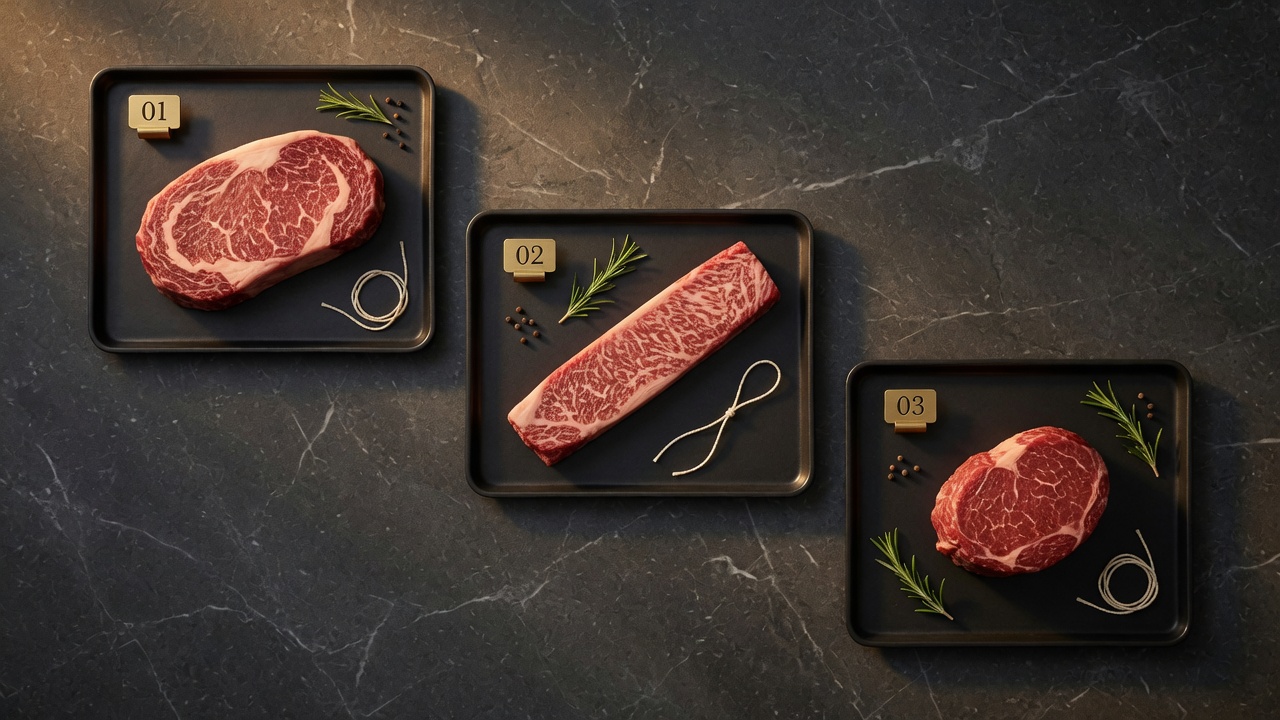 The board, weekday afternoon
№ 02 Cut
Cut to your thickness, in front of you.
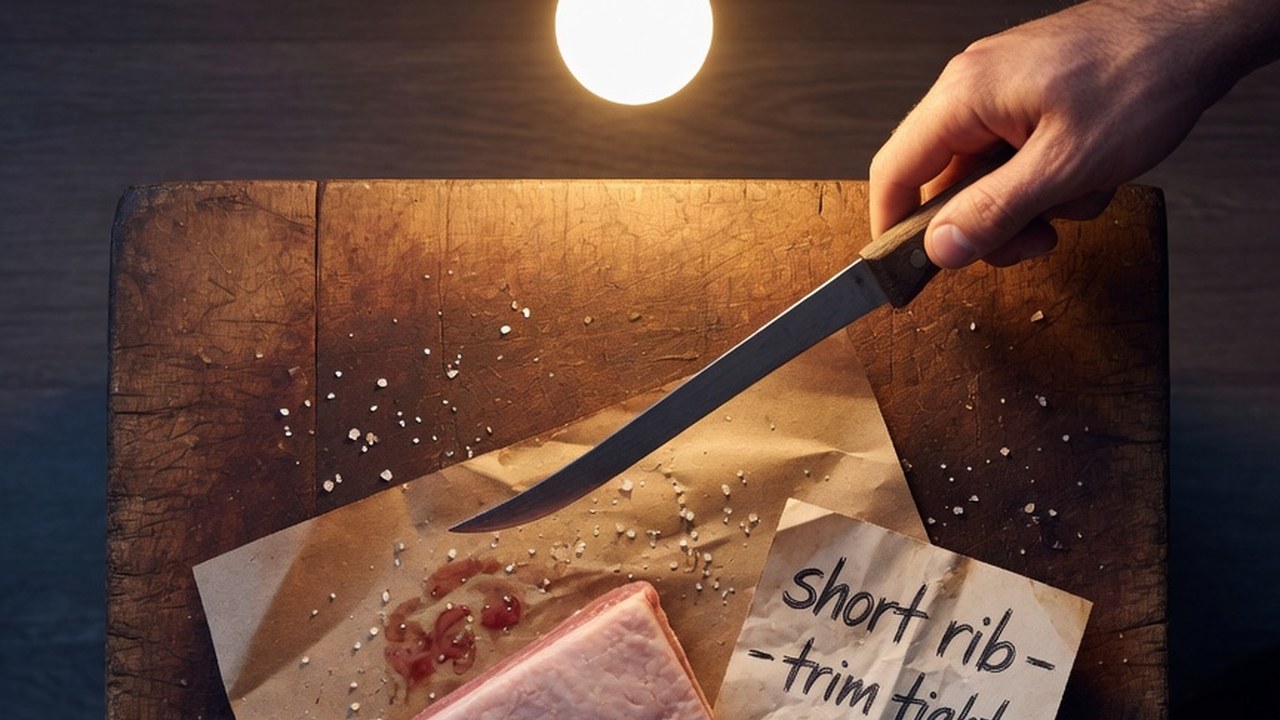
The cut is decided with you, not for you. A ribeye for two — one inch? One and a quarter? One and a half, for the rare-in-the-middle crowd? The difference is a slice of the knife and a few ounces on the scale. We ask.
We trim what you want trimmed. Some people want the fat cap off the ribeye; some people want it left on for the baste. The sirloin cap is the most underrated cut in the case — we’ll steer you toward it if you ask, otherwise it sits in tray 03 and waits for someone to notice. A Denver steak is a single muscle from the chuck, and most people have never heard of it; it cooks like a strip, eats like a tenderloin, and costs half.
If you want us to butterfly, score, French, bone-out, or tie — we do all of it. The knife work is the part of the job we got into this for, and we will happily spend ten minutes on a single pork chop if that’s what it takes to get it right.
№ 03 Wrap
Paper, a pencil mark, and your name.
We wrap in butcher paper, not plastic. The paper breathes — important for dry-aged cuts, where plastic traps moisture and ruins the crust we spent 42 days building. For everything else, paper is just simpler, and you can re-use it for wrapping sandwiches.
The grease-pencil mark on the paper is the receipt. It has the cut, the date, the weight, and (if you reserved it) your name. No bar code. No QR code. No app download. If you bring the paper back next week and we can’t read the pencil mark, we’ll figure out what it was from the date and the cut.
If you want it plastic-wrapped for the freezer — fine, we have plastic wrap on the counter. We won’t lecture you about it. The default is paper because paper is the right answer for the way the meat leaves the shop. The plastic is for the trip home in a hot car.
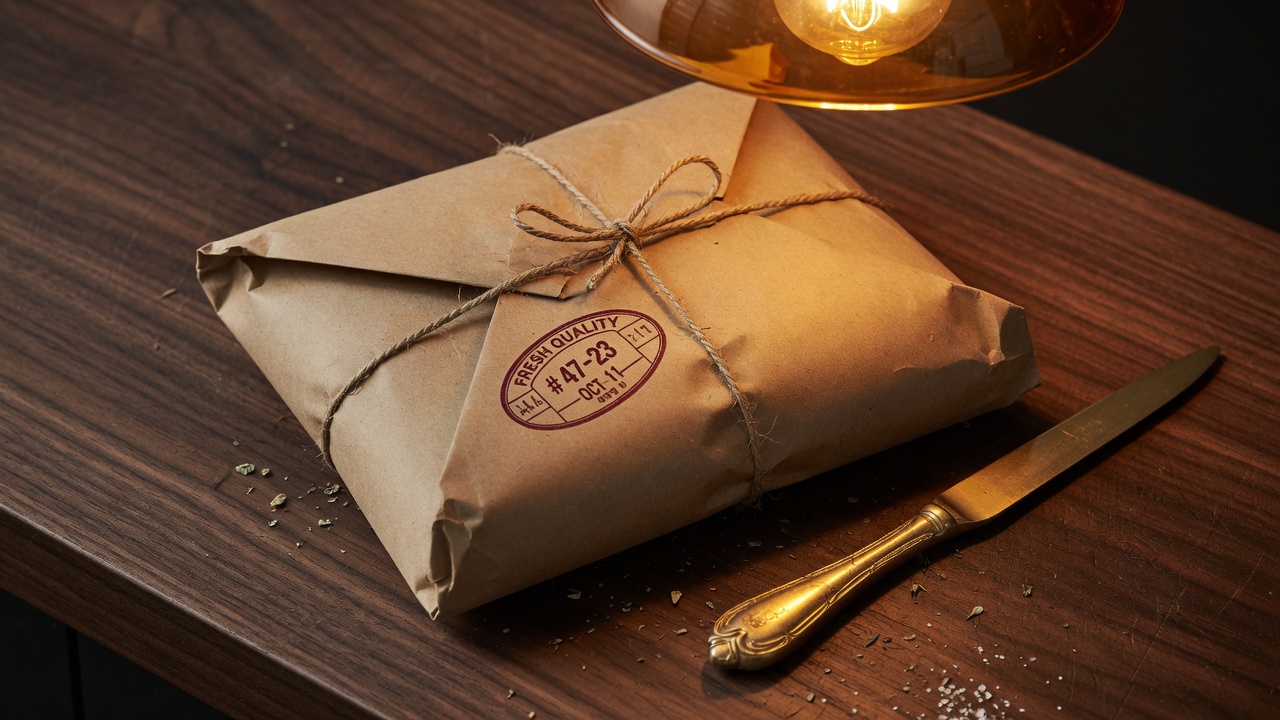 Wrapped and marked
№ 04 Walk-through
What a Saturday purchase actually looks like.
Saturday 11:14 AM. A couple in their thirties at the counter. They want to grill dinner for four adults and two kids. They’ve never cooked a ribeye. We talk for six minutes — that’s the actual job.
“We want to grill something good.”
We ask what they usually cook. They say chicken thighs and pork chops, both done on a gas grill in the backyard. They’ve done steak at restaurants, not at home. They’re nervous about overcooking.
“How about a Denver?”
We point at tray 03, the sirloin cap. Explain that the Denver cooks in 6-8 minutes on a hot grill, takes seasoning more than marinade, and is forgiving — it stays tender past medium. $17/lb. They look at each other. They want it.
Two pieces, 1.25” thick.
We slice two 1.25-inch steaks off the primal, weigh them — 1.4 pounds total — and trim the silverskin. We score the fat in a crosshatch so it doesn’t buckle. We tell them: salt both sides 30 minutes before, then grill 3 minutes per side, rest 5 minutes.
Paper, mark, pay.
Wrapped in paper, marked “DENVER ×2 — 1.25” — 11:22 — $24.” Cash. They walk out. Eight minutes total, six of which were talking.
They come back Thursday.
The sirloin cap was good. They want to know what else is on the case that cooks like that. We point at the flat iron, the hanger, and the bavette. They pick the flat iron. Same drill.
This is the entire business model. It is six minutes of conversation, a knife, and a piece of paper. We do not have an app, a loyalty program, a newsletter funnel, or a digital scale that texts the customer. The counter is the point.