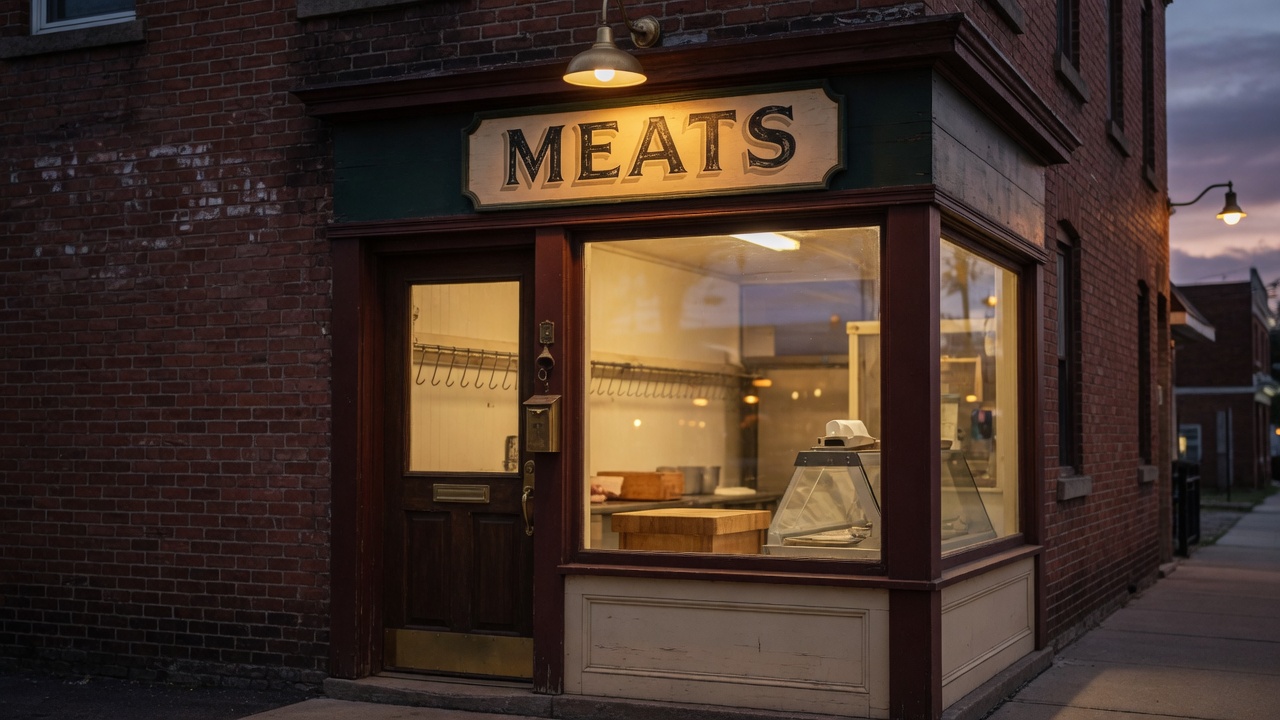
The shop
A neighborhood counter, run like one.
We’re two butchers, one sharpener, and a stack of paper. We opened because the best cuts in our city were being shipped frozen, shrink-wrapped, and stamped with someone else’s logo. We thought the counter could do better.
№ 01 What this place is
A butcher counter, not a meat boutique.
Sagikos’ Meat Dispensary is a small, walk-in butcher counter. The case turns over daily — what’s on the board on a Wednesday will be different from Thursday. We don’t keep a backroom deep-freeze of anonymous primals. When something’s gone, it’s gone, and that’s the point.
You walk in, you talk to the person behind the counter, that person picks up a knife. There’s no second step, no middle layer, no online cart between you and the meat. We wrap in paper and hand it back over the counter. Cash, card, or a name on a slip — the math of the place is uncomplicated on purpose.
If you want to know what a cut is, what it does, why it costs what it does, or what to do with it at home — that conversation is part of the price. It’s not an upsell. It’s the whole job.
№ 02 What this place isn’t
Things we won’t do.
- We won’t shrink-wrap.Plastic wrap tells you nothing about the meat. Paper, a grease-pencil mark, and the person who cut it — that’s the receipt.
- We won’t ship.Your cut is handed across the counter, cold, in front of you. We don’t courier it to your door three days later in a foam box.
- We won’t pretend the price is what it isn’t.If we’ve marked something down because it’s a thin cut or aging fast, the tag says so. We don’t hide shrink behind shrink-wrap.
- We won’t talk down to you.If you don’t know what a Denver is, you’re not the only one in line who doesn’t. That’s the counter’s job.
№ 03 How we work
Two of us, six days a week.
Sagikos (the senior partner) handles the beef and lamb. Kiki handles the pork, poultry, and the cured end of the case. The two of us break whole primals on Mondays and Thursdays, and walk through the case at opening to see what survived yesterday and what we need to move.
Mornings are for prep: breaking primals into the sub-primals the case actually shows, trimming silverskin, tying birds, slicing bacon. Mid-day is counter service. Evenings are for cleaning, sharpening, paperwork, and — when we’re lucky — testing a new recipe we might write up for the website later in the week. (We are not lucky most evenings.)
We don’t take appointments for visits — the counter is open on a walk-in basis during shop hours. We do take reservations for specific cuts. The two systems are different on purpose: walk-ins get what’s on the board; reservations get held under your name and picked up at the counter like a library book.
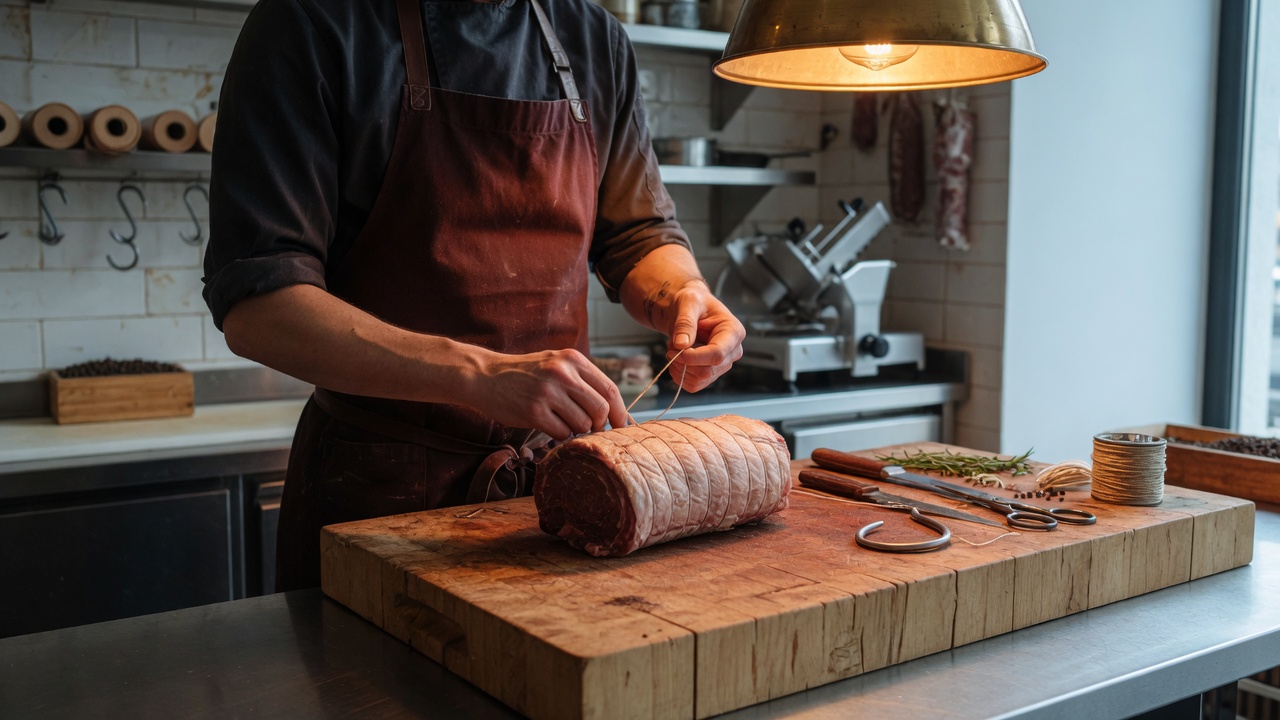 At the block — Sagikos, Tuesday morning
№ 04 Who we work with
Farmers, a small abattoir, and us.
Cattle & lamb
Two small family ranches, both within 90 miles of the shop.
We pick up whole animals every other week, split between a Hereford/Angus herd outside Three Rivers and a Katahdin lamb flock near Comfort. Both ranches are grass-fed-and-finished, no antibiotics unless a single animal is sick, no growth implants. We pay on the rail, not the live weight, because the rancher works hard to keep the carcass clean and that should be the part we judge.
Pork & poultry
Heritage breed pork, pasture-raised poultry.
The pork comes from a Berkshire and Tamworth cross raised on a small diversified farm near Castroville — they get whey from a neighbor’s cheese operation, which is the kind of agricultural hand-shake we like to be part of. The poultry is a slower-growing Cornish cross from a co-op flock in Gonzales; they’re processed at 9-10 weeks, not the industrial 6.
Processing
One small inspected abattoir, 35 miles north.
We chose this abattoir because the owner answers the phone, the kill floor is calm, and the carcasses go into the chill cooler within 20 minutes of stun. None of the big places we tried before this could tell us what time a given animal went on the floor. This one can.
Sharpening
One sharpener, every Wednesday.
Robert brings his stones and his grandfather’s strop to the shop every Wednesday morning and goes over every knife in the place, including ours and yours if you bring one in. He charges $8 a knife and refuses to charge more, even for the Japanese deba he’s terrified of.
Come in. The counter is the point.
Walk-in hours Tuesday–Saturday, walk-ins 10–4 Saturday. Reserve a specific cut below — we’ll pull it from the cooler when you arrive.